
Categories
Choose Language


Popular Posts
[mashshare url="http://www.skyfiveproperties.com/blog/the-expat-real-estate-escape-how-us-buyers-are-discovering-mexicos-colonial-towns"]

The Expat Real Estate Escape: How US Buyers Are Discovering Mexico’s Colonial Towns

Americans have lived in Mexico’s colonial cities for decades. New buyers still encounter the same surprise: the best properties make more sense after you spend time on the street. A courtyard house may reveal little from the pavement, while its location can explain far more than a listing sheet.
For buyers, for instance, researching luxury real estate in San Miguel de Allende, location often shapes the search before square footage does. A beautiful property can lose much of its appeal if the daily walk feels inconvenient or the setting fails to match the owner’s routine. Buyers gain more from asking how they plan to use the city than from chasing the biggest house available.
The same logic reaches across colonial Mexico. Each city has its own scale and housing stock. Local topography can change a five-minute walk into a demanding climb. Historic protections can shape renovation plans long after closing. American buyers who treat the city itself as part of the property make better comparisons from the start.
San Miguel Shows Why the Model Works
San Miguel de Allende gives U.S. buyers a clear example of the colonial-city proposition. UNESCO recognizes the historic town for its sixteenth-century urban plan and the rich civic architecture that followed during the eighteenth century. The city still carries that history through narrow streets and substantial urban houses. Private courtyards often give residents a surprising sense of separation from the activity outside.
Buyers who want to find homes for sale in Guadiana can see how the market extends beyond the historic center. Guadiana lies close to Centro and offers a more residential feel around Parque Guadiana. Its location can suit owners who want regular access to the center without making the busiest streets part of everyday life.
This neighborhood comparison deserves more attention than a broad search for “colonial charm.” Two homes with similar interiors can create very different routines if one requires frequent car trips and the other puts daily destinations within an easy walk. In a city where streets change grade quickly, buyers should judge the route home with the same care they give the home itself.
Each Colonial City Creates a Different Buying Experience
Take Guanajuato, for example: its streets respond to the terrain instead of following the regular pattern that many Spanish colonial cities use. That physical form can produce remarkable views and highly individual houses. It can also turn parking or a steep approach into a daily concern, so buyers should test the route to a property on foot before they judge its location.
Oaxaca asks different questions. Its historic center follows a formal grid, while local builders historically used thick walls and lower profiles in response to seismic risk. A buyer considering an older house should examine structural alterations closely. Previous owners may have enlarged openings or removed walls in ways that affect how the building handles movement.
Price comparisons need local context as well. Historic lot shapes can distort a simple cost-per-square-foot calculation. Renovation quality can widen the gap between two nearby homes even further. Buyers should compare properties within the same micro-market before they use another colonial city as a price benchmark.
U.S. Buyers Are Looking Beyond Mexico’s Resort Markets
For years, many American buyers associated Mexican real estate with coastal destinations. Colonial towns offer a very different proposition. The attraction comes from living inside a working city with a strong cultural identity rather than owning a property centered on the vacation cycle. San Miguel de Allende has already proved how powerful that appeal can become among foreign homeowners.
Other cities give buyers their own version of the experience. Mérida combines colonial neighborhoods with the scale and services of a major city. Oaxaca attracts buyers who want historic architecture within a city known for art and food. Guanajuato offers a more compact setting shaped by steep streets and centuries-old buildings. The choice depends less on finding the “best” colonial town and more on finding the city whose rhythm fits the buyer.
That shift also changes the role of the property. Many buyers want a home they can use for long stays rather than a place reserved for occasional holidays. They look closely at daily life outside the front door. A compelling purchase gives them access to the city itself and makes the house feel connected to the reason they moved to Mexico.
Established Expat Communities Make Relocation Easier
San Miguel de Allende shows how an international community can influence real estate demand without turning a colonial city into a conventional resort. Long-term foreign residents have supported English-language cultural groups and social organizations for years. New arrivals can build connections quickly while still living in a distinctly Mexican city.
Mérida offers a different version of that transition. Its foreign community represents a much smaller share of a large metropolitan population, so newcomers encounter more of everyday Mexican city life from the beginning. The city also has major medical facilities and an international airport. Those practical advantages can carry considerable weight for Americans planning a permanent move or spending several months in Mexico each year.
This social infrastructure helps explain why some colonial towns convert visitors into homeowners so effectively. A buyer can arrive for the architecture and discover that the city supports a much fuller life than expected. Real estate then becomes part of a broader relocation decision rather than the sole attraction.
Colonial Homes Offer a Form of Luxury That Is Hard to Reproduce
Mexico’s colonial housing stock gives U.S. buyers something that new luxury development often struggles to imitate convincingly. Behind a restrained street facade, an older house may open into a private courtyard with rooms around it. Thick walls create deep openings and a sense of permanence. Historic proportions give the property character before an owner adds furniture or decoration.
Renovated colonial homes can pair that architectural character with contemporary comfort. Owners can update kitchens and climate systems while preserving the spatial qualities that made the house desirable in the first place. Newer properties in colonial cities also borrow from these traditions through private patios and inward-facing plans. Buyers therefore have options across different ages of construction without losing the connection to local architecture.
Don’t Forget That Foreign Ownership Works Differently Inland
Mexico’s Constitution limits direct foreign ownership within 100 kilometers of an international border and 50 kilometers of the coast. Many prominent colonial cities lie outside that restricted zone. U.S. citizens can acquire property directly in those inland locations after they satisfy the applicable Foreign Affairs requirements, including the Article 27 agreement.
Coastal property follows a different legal structure for many foreign residential buyers. Inside the restricted zone, foreign buyers commonly use a fideicomiso, a bank trust. Americans who first researched Mexican real estate through beach markets sometimes assume the same structure applies everywhere. A buyer in San Miguel should confirm the process for the exact parcel before making that assumption.
A Mexican notario público formalizes the deed and registers the transfer. Independent legal advice can give the buyer another layer of review. Ask the notario to confirm the seller’s title status before closing. Your own adviser can review the purchase contract from your side and explain any condition that deserves revision before you sign.
[mashshare]
Popular Posts:

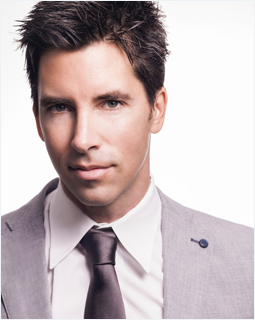
Kaya Wittenburg
Kaya Wittenburg is the Founder and CEO of Sky Five Properties. Since the age of 10, real estate has been deeply ingrained into his thoughts. With world-class negotiation and deal-making skills, he brings a highly impactful presence into every transaction that he touches.
He is here to help you use real estate as a vehicle to develop your own personal empire and feel deeply satisfied along the way. If you have an interest in buying, selling or renting property in South Florida, contact Kaya today.